
Fiberglass vs carbon fiber pickleball paddles
We make both, so we have no reason to oversell either. Fiberglass is the friendlier face for learning; carbon fiber is the upgrade when your game starts asking for spin and touch.
How a fiberglass face plays
Fiberglass flexes a little at contact, which springs the ball off the face. The result is easy power: beginners get depth on serves and returns without a big swing. Our fiberglass paddles pair that face with a polypropylene honeycomb core and weigh about 7.8 oz.
Who it suits
New players, families, casual doubles and anyone who wants a complete set at an approachable price.
How a raw carbon face plays
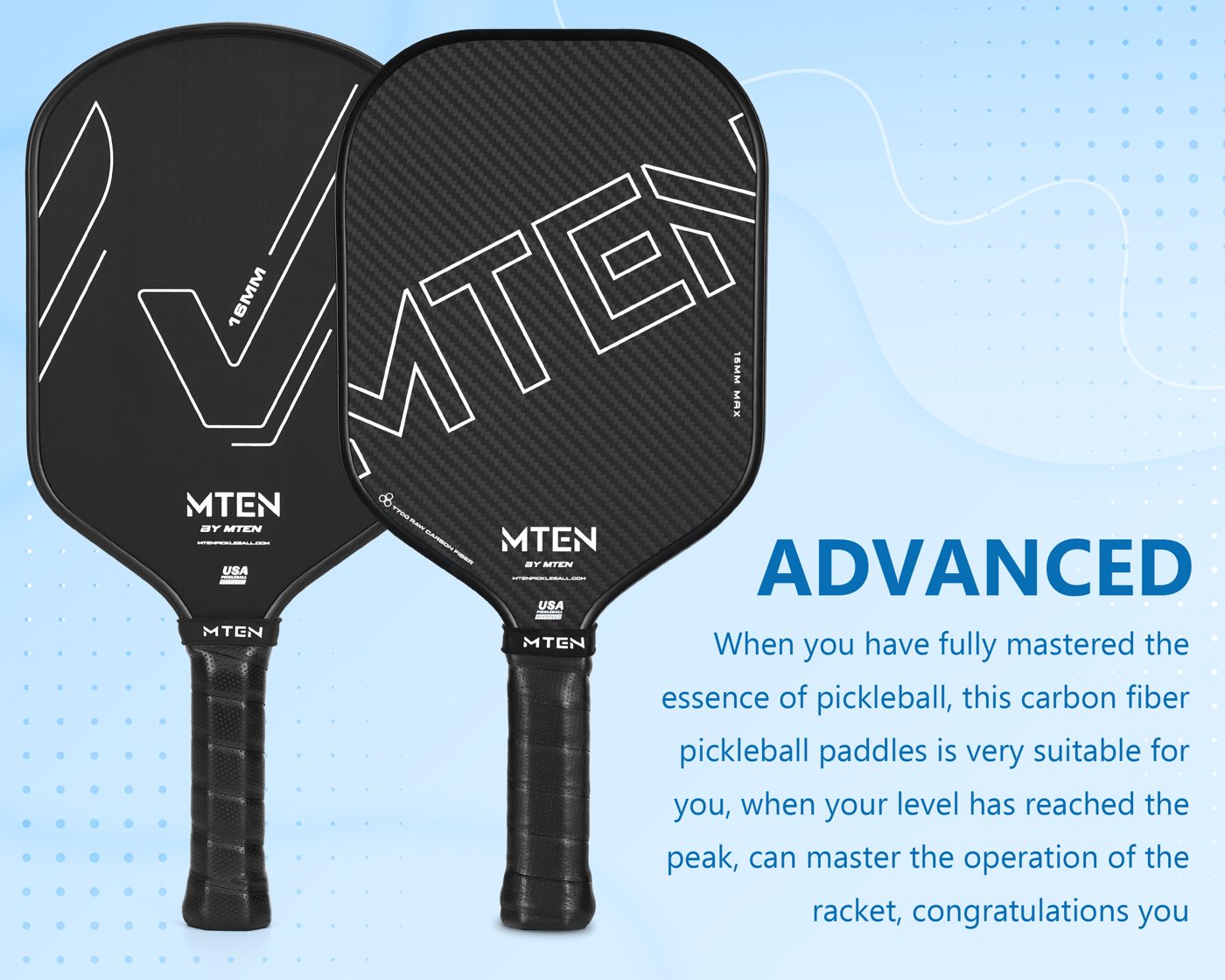
Carbon fiber is stiffer. It spreads the impact across the face and, with a raw textured surface like our T700 face, grips the ball for more spin and a longer dwell time. Our carbon paddle adds a 16mm honeycomb core, which softens the feel and rewards controlled dinks and resets.
Who it suits
Players who have a season behind them, who are working on spin serves, drops and kitchen battles.
Side by side
Power: fiberglass gives more free pop; carbon asks for a fuller swing but stays steady. Spin: carbon wins. Control: the 16mm carbon paddle wins on soft shots. Forgiveness: our wide fiberglass faces are easier on mishits. Price: fiberglass sets include balls and a bag; the carbon paddle is sold alone.
Our suggestion
Start with a fiberglass set, play a season, and add the carbon paddle when you notice you want more from your drops. Keep the fiberglass paddles — they become the guest paddles every regular group needs.
Quick answers
Is a 14mm or 16mm paddle better?
Thinner cores feel faster and poppier; 16mm cores feel softer and more controlled. Our carbon paddle uses 16mm for a control-first feel.
Can I play tournaments with a fiberglass paddle?
Yes. Our fiberglass paddles are USAPA approved, so they are legal for sanctioned play.